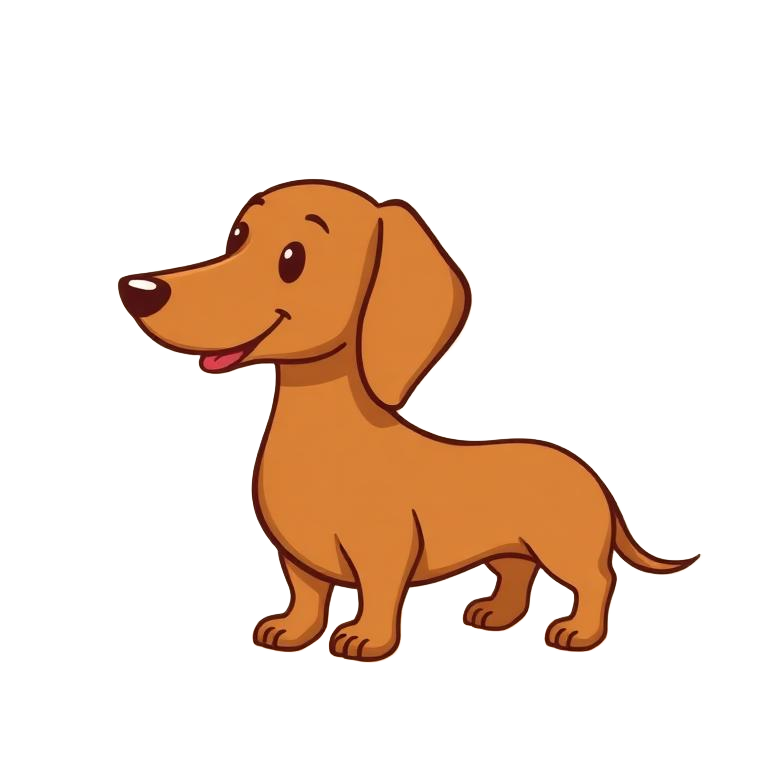
Dachshund weight chart & body condition guide
A healthy weight is one of the most powerful things you can control for your Dachshund's back and IVDD risk. Use this chart and body condition guide to keep your dog in the right range.
Dachshund weight chart by size
Dachshunds come in two official breed sizes: Miniature and Standard. Many pets fall in the unofficial "tweenie" range between them. The numbers below are healthy adult ranges, not strict targets — build, muscle and coat type all matter.
| Size | Weight | Notes |
|---|---|---|
| Miniature | Up to 11 lb Up to 5 kg | AKC/UK breed standard |
| Tweenie (unofficial) | 11–16 lb 5–7.3 kg | Common pet term, not a show class |
| Standard | 16–32 lb 7.3–14.5 kg | AKC/UK breed standard |
Puppies, seniors, very active dogs and nursing bitches may sit outside these ranges and still be healthy. Always combine a weight chart with a body condition score.
Body condition score (BCS) for Dachshunds
The 1–9 body condition score is more useful than the scale alone. It tells you whether your dog is carrying the right amount of fat and muscle for their frame. Use the chart below and feel your dog's ribs and waist at least once a month.
How weight affects IVDD risk
Excess body fat puts extra load on the spine and the discs between vertebrae. For a Dachshund, every extra pound multiplies the strain on an already long back. Research consistently shows that overweight and obese Dachshunds are more likely to develop IVDD, and that weight loss after an episode improves recovery and reduces recurrence.
- Extra fat around the chest and abdomen changes spinal posture and gait.
- Overweight dogs are less able to support themselves during jumping or stairs.
- Inflammatory compounds released by fat tissue can worsen disc degeneration.
- Post-surgical outcomes are better for dogs at a lean body condition.
Keeping your Dachshund at a BCS of 4–5 is one of the cheapest, most effective ways to protect their back.
Quick weight checks you can do at home
- Weigh monthly. Use a home scale: weigh yourself, then weigh yourself holding your dog, and subtract. Small digital scales are more accurate for puppies.
- Feel the ribs. With flat fingers, you should feel ribs easily under a light fat cover, like a woven jumper over a firm surface.
- Look at the waist. From above, your dog should have a visible waist behind the ribs. From the side, the belly should tuck up.
- Watch the tuck and topline. A straight or slightly arched topline and a clear abdominal tuck are signs of a healthy silhouette.
When to see a vet
Talk to your vet if your dog is gaining or losing weight unexpectedly, if you cannot get them into the ideal BCS range after 8–12 weeks of diet changes, or if your dog is already on the higher side of the weight chart. Sudden weight loss, especially with a good appetite, can signal illness and should be checked promptly.
Get an AI weight & posture check
DachsCheck evaluates your Dachshund's body condition, topline and posture from photos and flags trends that can affect IVDD risk. Use it alongside your vet's advice to track your dog over time.
Vet disclaimer
DachsCheck is an educational screening tool. It cannot diagnose obesity, IVDD or any other condition and does not replace a veterinary exam, body condition assessment by a professional, or a tailored nutrition plan. Always consult a qualified veterinarian for feeding, weight-loss and medical decisions.